OUR HISTORY
A Journey of Transformation through the Dhamma
In the serene land of Arunachal Pradesh—the Land of the Rising Sun—nestled among rivers, forests, and quiet hills, lies the small township of Diyun in Changlang district. It is here that a remarkable journey of spiritual awakening began.
The Chakma community, followers of the Theravāda Buddhist tradition, had carried with them a rich cultural and spiritual heritage from the Chittagong Hill Tracts. Displaced during the 1960s due to the Kaptai Dam, they rebuilt their lives in Arunachal Pradesh with resilience and hope.
Yet, over time, many traditional practices had drifted away from the true essence of the Buddha’s teachings. Rituals and customs grew strong, while the deeper practice of morality, meditation, and wisdom slowly faded. There arose a silent need—a longing for guidance, clarity, and spiritual renewal.
The Turning Point
That moment arrived in January 2002, when Most Venerable Nandapala Mahāthera came to Diyun at the invitation of local devotees. His teachings were simple, yet profound. He spoke not in complexity, but in clarity—bringing the Dhamma into everyday life. He taught the path of:
-
Dāna – generosity
-
Sīla – moral living
-
Bhāvanā – meditation
He explained the law of kamma, the cycle of birth and rebirth, and the path leading to the end of suffering. But more than words, it was the experience of the Dhamma that touched the people.
Slowly, hearts began to change.
People started letting go of harmful habits and long-held superstitions. Villages that once struggled with confusion found direction. A quiet transformation began to unfold—one that would later be remembered as a spiritual revolution in the lives of the Chakma community.
The Birth of a Living Center
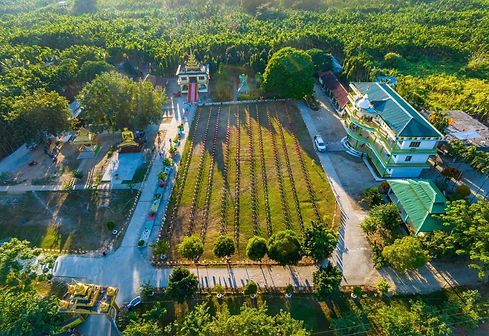
From this awakening emerged Sadhanarama Bana Vihara—not just as a monastery, but as a living center of practice, learning, and community life. Here, monks, novices, and lay devotees gathered to meditate, chant, and learn the Dhamma. The Vihara became a place where ancient wisdom met daily life—where spirituality was not separate, but deeply woven into the rhythm of the community.
As the teachings spread, more centers were established across the region—carrying the light of the Dhamma to new villages and new generations.
A Growing Movement
With time, this spiritual movement expanded across Changlang district and beyond. Bana Vihara centers and meditation centers were established, guiding thousands of people toward a life rooted in wisdom, discipline, and compassion.
The years 2015, 2017, and 2022 became milestones in this journey, marked by the Vassavāsa (Rain Retreat) led by Most Venerable Nandapala Mahāthera. During these sacred periods, the community deepened its practice through meditation, chanting, and Dhamma teachings.
The Foundation of Service
As the spiritual movement grew, so did the need to serve society in broader ways—through education, community welfare, cultural preservation, and social development. In response to this need, Sadhanarama Foundation was established on 17 September 2019 as the charitable and service-oriented arm of Sadhanarama Bana Vihara.
The Foundation became a bridge—bringing together spiritual values and social action. It extended the spirit of the Dhamma beyond the monastery into schools, villages, and community initiatives, working for the well-being of all.
A Living Legacy
Today, Sadhanarama Bana Vihara stands as a symbol of transformation—where lives have changed, communities have grown stronger, and the teachings of the Buddha continue to shine.
What began as a quiet visit in a small town has become a living tradition—guiding people toward a life of peace, wisdom, and compassion.
And the journey continues.

Aims & Objectives
Sadhanarama Foundation is guided by the teachings of the Buddha and is committed to promoting spiritual, cultural, educational, and social development for the welfare and happiness of all.
The Foundation seeks to achieve the following aims and objectives:
1. Promotion of Dhamma and Spiritual Practice
To spread the teachings of the Buddha through Dhamma discourses, meditation programs, chanting, and spiritual guidance, fostering inner peace, mindfulness, and ethical living.
2. Monastic Education and Training
To support the training and development of monks and novices by providing facilities for education, discipline, meditation, and study of Buddhist scriptures.
3. Preservation of Cultural Heritage
To preserve and promote the rich cultural and spiritual heritage of the Chakma Buddhist community through traditional practices, ceremonies, and cultural documentation.
4. Educational Development
To promote education by establishing and supporting schools, learning centers, and educational programs that encourage moral values, discipline, and academic growth.
5. Community Welfare and Social Service
To undertake activities for the welfare of society, including support for underprivileged communities, relief work, and initiatives that improve quality of life.

MISSION
To serve the mankind better and contribute our share to build a free, peaceful and happy world through promotion of a society where people of diverse cultures are able to define their own development paradigm and fulfill their economic, social, cultural, and spiritual aspirations.